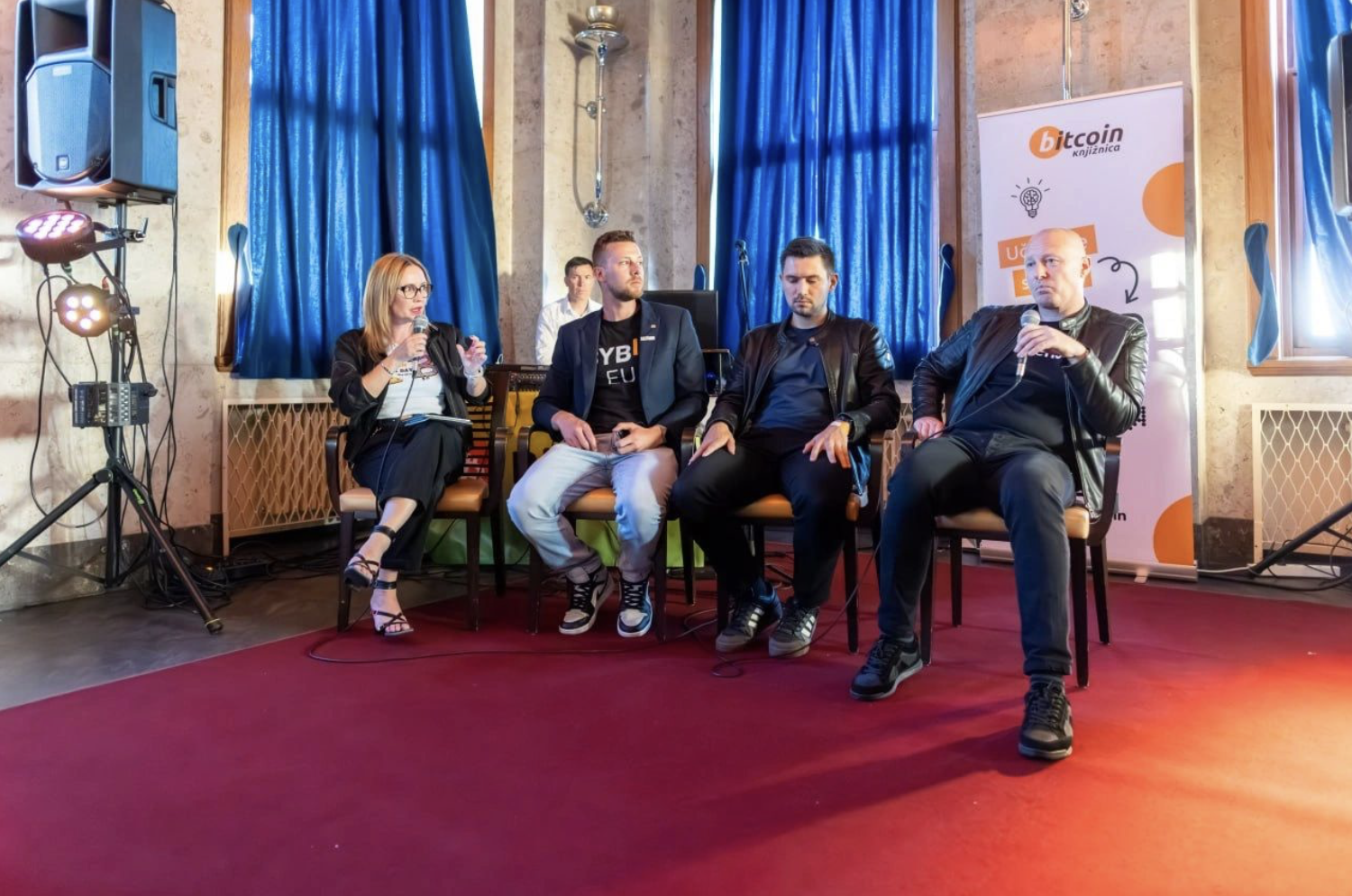
At the end of November 2025, Blockchain Alliance Europe had the opportunity to organise a panel at the Industry 5.0 Summit in Ljubljana, Slovenia. The idea of the panel was to compare the approaches of different European countries to crypto asset taxation and to the implementation of the Markets in Crypto Assets Act, and the conversations continued beyond the panel.

Magnus Jones, a board member of the Nordic Blockchain Coalition, explained taxation in Sweden, Norway, and Denmark and commented on how Slovenia heavily leaned on Sweden’s crypto tax law: »Capital gains tax law is not bad in essence, but the asymmetric principle of only 70% deduction right for losses is not good. Neither do you get any deduction if you lose your keys – e.g., you inherit crypto assets, don’t get the keys, and get a lifetime tax obligation.« Jones also emphasised that Denmark’s proposal for an annual 42% tax on unrealised crypto gains is beyond comprehension. »On the other hand, Norway has a different approach; they created the world’s first Crypto Taskforce Group, and also the world’s first guidance on how to tax DeFi and NFTs, in addition to having an active, open, and proactive dialogue with the industry.«, explains Jones.
Gregor Oprčkal, the representative of NAKA, highlighted that crypto asset taxation can have an immense impact on the crypto payments industry. The Slovenian proposal for a capital gains crypto tax, presented to the public at the end of April 2025, treats every transaction as a tax event. Every crypto payment, even for coffee, is a tax event. “Let’s say that a group of five Slovenians go abroad and one of them pays for drinks with crypto, and the others compensate for those drinks. In total, that would be nine taxational events and each time you could pay 25% tax on a capital gain. That is not sustainable for the crypto payments industry or crypto users.
“The Slovenian proposal of crypto tax has many flaws. With Blockchain Alliance Europe, we sent several comments that actually exceed the length of the proposed legislative document.”, explained Toni Čepon from Bitcoin Slovenia. Another essential topic is the privacy of individual crypto asset holders, as the proposed Slovenian crypto tax law requires the self-reporting of crypto assets to financial authorities. “It is not that the crypto community has something to hide, but crypto assets are much more liquid than stocks, bonds or property. There is also an increased number of “wrench attacks” on crypto holders throughout Europe, so the legislators should take that into account.” Magnus Jones added that in Sweden, where they have a similar crypto tax law, every crypto holder has been attacked or threatened.
“Listening to you, I believe we in Croatia live in crypto tax heaven. We have a 12% tax on capital gains for individuals that applies to holding periods of less than 2 years.”, said Morana Vukić Perak, legal counsel from Electrocoin and representative of Alice in Blockchains initiative. “We also have a very constructive dialogue with our legislators, who actually listen to the hurdles and needs of the industry. I believe that is the only way to have beneficial and fair laws when it comes to crypto.”
All the panellists also concluded that Europe is not the best starting point for blockchain start-ups, especially if they are crypto service providers, since it is very costly for small enterprises to obtain an MiCA license.” If we compare Europe to the USA, where presidential executive orders back blockchain innovations, Europe is staying far behind.”, underlined Tni Čepon, friom Bitcoin Slovenia.
The panel was led and organised by Tanja Bivic Plankar, president of Blockchain Alliance Europe, as one of the initiative’s activities in 2025—many thanks to Tadej Slapnik and the Industry 5.0 Institute for inviting us and including us in the program.